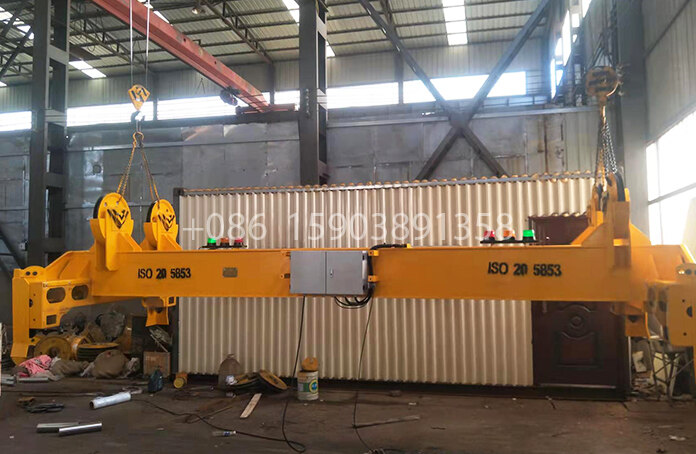
Container Spreader
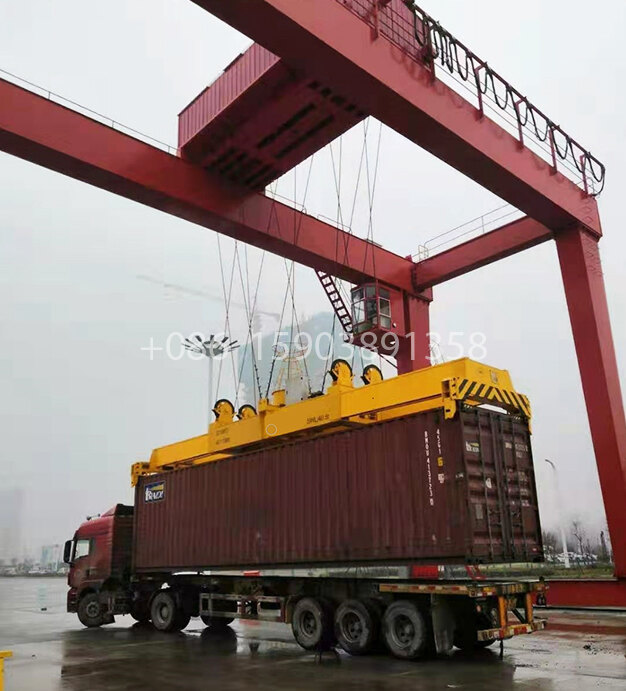
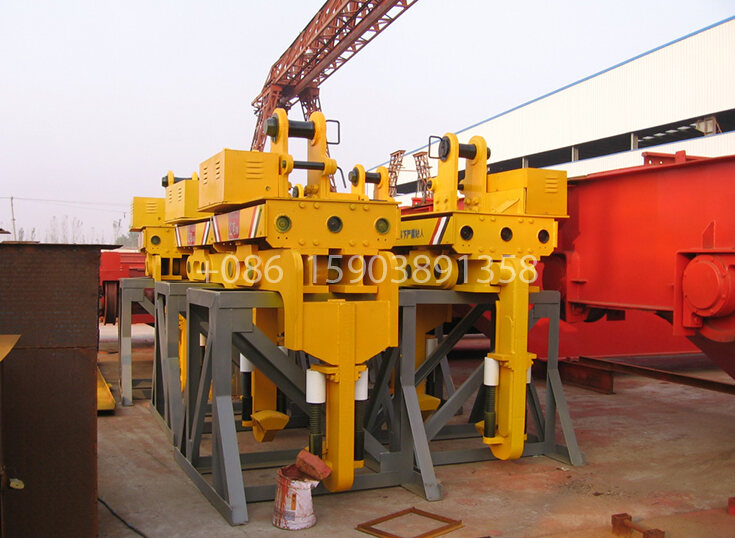
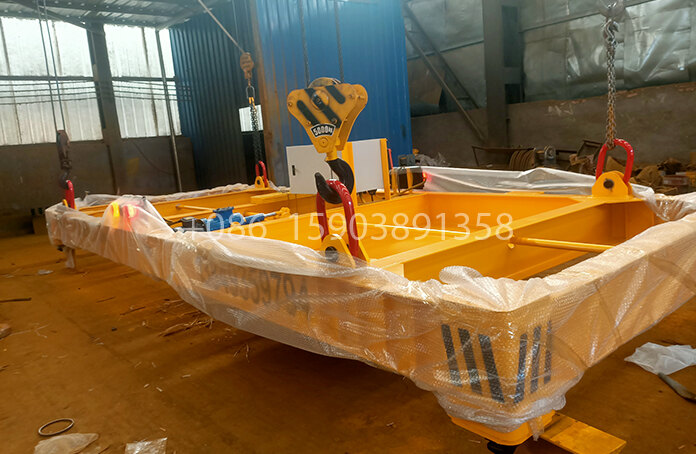
Container spreaders are specialized equipment used for container loading and unloading operations. Their core working principle involves connecting the four corner locks on the end beam to the top corner fittings of the container. The operator controls the opening and closing of these locks to complete the lifting and unloading of the container. Various types of spreaders exist, each with different mechanical structures and operating methods, aiming to improve the efficiency and flexibility of container loading and unloading. They are widely used in container transshipment scenarios such as ports, docks, and warehouses.
Product Description
Container spreaders are core specialized equipment for container loading and unloading operations. They connect to the container via twist locks to achieve lifting. Based on their working principle, types, and characteristics, the specific details are as follows:
Core Positioning
Specialized spreaders designed specifically for container loading and unloading. Their core function is to connect the container to the lifting equipment, completing the lifting and unloading operations of the container, adaptable to various container transshipment scenarios.
Core Working Principle
Through the twist locks at the four corners of the spreader's end beam, they connect to the top corner fittings of the container. The operator controls the opening and closing of the twist locks, thereby achieving stable container loading and unloading operations.
Type Classification
Based on different structures and working methods, spreaders are mainly divided into seven types: fixed, master-slave, mother-daughter, telescopic, swivel, double-box spreaders, and movable double-box spreaders. Each type of spreader is suitable for different operational needs.
Fixed Spreaders
These have no dedicated power unit. The lifting of the wire rope drives a ratchet mechanism, which in turn drives the turnlock to rotate, achieving automatic opening and closing of the turnlock's locking pins. The structure is simple.
Master-Slave Spreaders
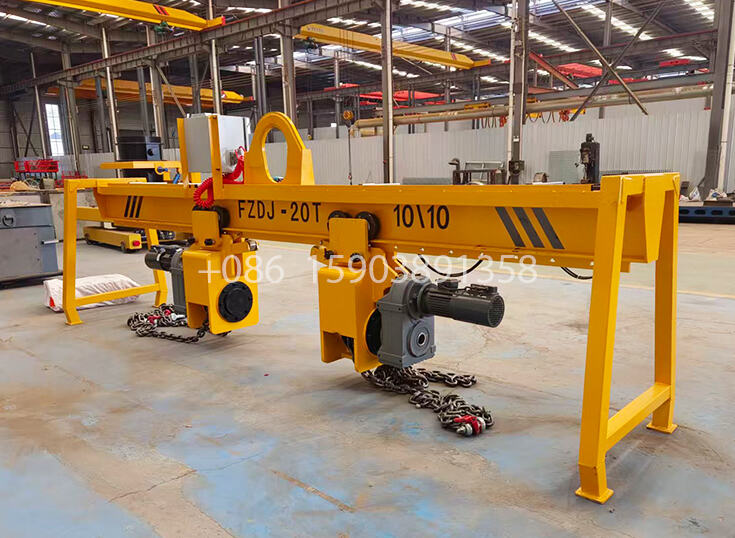
These consist of two spreaders, an upper and a lower one. The upper spreader is equipped with a power unit. When lifting containers of different sizes, there is no need to change the entire spreader; only the lower spreader needs to be installed or removed, making operation convenient.
Mother-Daughter Spreaders
A power system is installed on a dedicated lifting beam, which drives the turnlock mechanism on the lower spreader. Different sizes of container fixed spreaders can be installed under the lifting beam, adapting to various container sizes.
Telescopic Spreader
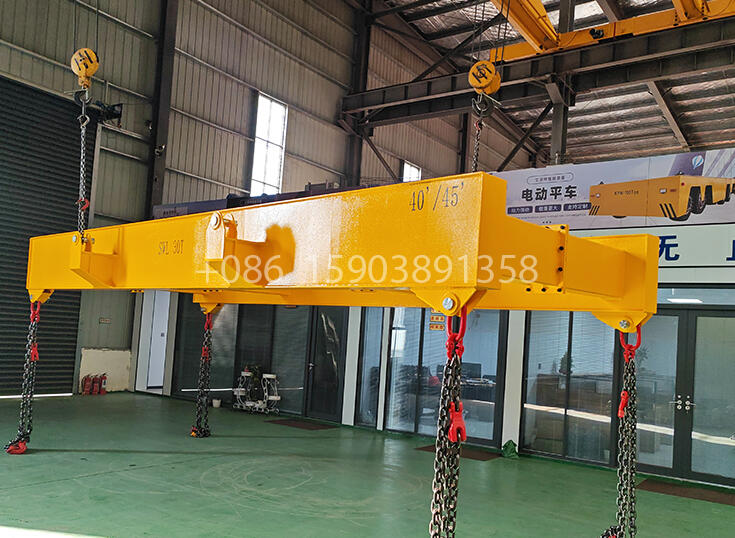
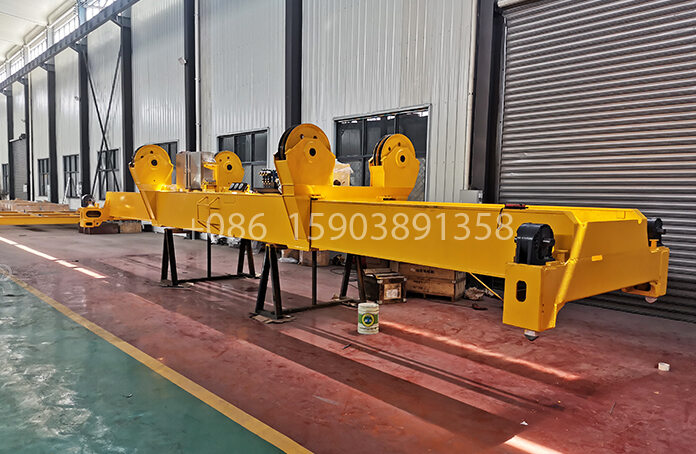
Driven by a hydraulic transmission via a telescopic chain or cylinder, the spreader can automatically extend and retract, changing its length to adapt to the loading and unloading needs of containers of different sizes, offering high flexibility.
Rotary Spreader
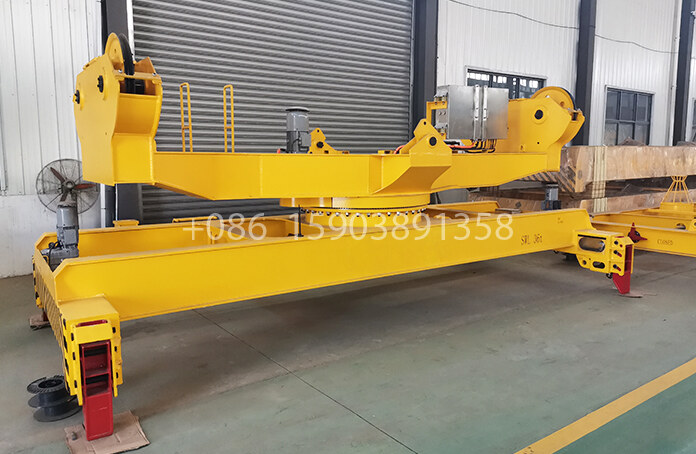
Composed of an upper rotating device, a leveling system, and a lower telescopic spreader, it can achieve planar rotational movement, adapting to loading and unloading scenarios requiring adjustment of container angles.
Double Container Spreader
A non-movable telescopic spreader that can simultaneously load and unload two 20-foot (ft) containers, significantly improving container loading and unloading efficiency.
Movable Double Container Spreader
Structurally similar to a standard double container spreader, it adds a translation mechanism for an intermediate lifting point; capable of loading and unloading single containers or two 20-foot (ft) containers with adjustable spacing, offering greater adaptability.
Core Purpose
Through different mechanical structures and operating methods, the core purpose of various spreaders is to improve the efficiency and flexibility of container loading and unloading, meeting the transshipment needs of containers of different sizes and in different scenarios.
Product Feature
Highly Specialized
Designed specifically for container loading and unloading, it precisely connects with the container's top corner fittings via four corner twist locks, ensuring a secure and stable loading and unloading process.
Convenient Operation
The core operation is controlled by the driver, with the twist locks opening and closing automatically. The operation process is simple, requiring no complex manual assistance and reducing operational difficulty.
Diverse Types and Wide Adaptability
Covering seven different types, it can be flexibly selected according to container specifications (e.g., 20-foot) and loading/unloading requirements (single/double container, fixed/telescopic), adapting to various operating scenarios.
Fixed Spreader Features
No dedicated power unit required, simple structure, relying on wire rope lifting to drive the twist locks to automatically open and close, convenient maintenance, and low cost.
Master-Slave Spreader Features
Combined upper and lower spreader design, with the power unit integrated into the upper spreader. Simply changing the lower spreader adapts to different container sizes, saving operation time. 6. **Mother-and-Child Spreader Features:** Equipped with a power system, the lifting beam allows for flexible replacement of different specifications of fixed spreaders, adapting to various container sizes and offering strong versatility.
Telescopic Spreader Features
Hydraulically driven, it automatically extends and adjusts its length, adapting to different container sizes without requiring spreader changes, offering outstanding flexibility.
Swivel Spreader Features
Features planar rotation capability and a leveling system, allowing adjustment of container angles to suit loading and unloading scenarios requiring angle adjustment.
Double Container Spreader Features
A non-movable telescopic design allows for loading and unloading two 20-foot containers at once, significantly improving loading and unloading efficiency and suitable for bulk container transshipment.
Movable Double Container Spreader Features
Combines single-container and double-container loading and unloading functions, with a movable intermediate lifting point, adapting to 20-foot containers with different spacing, offering greater flexibility than ordinary double container spreaders.
Outstanding Efficiency
All spreaders are optimized for loading and unloading efficiency, especially double container and movable double container spreaders, which significantly improve container transshipment efficiency.
Wheel Assembly Materials
Main Materials
1. Main Structure (Crossbeams, Lifting Beams): The core is made of high-quality carbon structural steel (mostly Q235B or Q355B), welded and aged, possessing high strength, high rigidity, and good load-bearing capacity, capable of stably bearing the weight of the container and resisting impact forces during lifting.
2. Twist Lock Components: The twist locks are made of high-strength alloy steel, heat-treated by quenching and tempering, resulting in high hardness, strong wear resistance, and good impact resistance, ensuring a firm connection with the container's top corner fittings and preventing deformation or breakage; the gears and shafts of the twist lock drive mechanism are made of high-quality alloy steel, ensuring smooth transmission and a long service life.
3. Power and Transmission Components: The hydraulic transmission system (telescopic and rotary spreaders) uses high-strength alloy steel for the cylinders and telescopic chains, and oil-resistant, high-temperature-resistant high-quality rubber or polyurethane seals to ensure reliable and leak-free hydraulic system sealing. The power unit (master-slave and mother-daughter spreaders) uses high-quality steel and precision electrical components for stable power and high transmission efficiency.
4. Auxiliary Components: The guide rails and sliders of the translation mechanism (movable double-box spreader) are made of wear-resistant alloy steel, precision-machined for smooth sliding and good wear resistance. The connecting parts of the leveling system (rotary spreader) are made of high-strength stainless steel for rust and corrosion resistance. All fasteners and connectors are made of high-strength carbon steel or stainless steel for secure connections, suitable for harsh environments such as ports and docks with high humidity and salt spray.
5. Protective components: The surface of the lifting device is treated with anti-corrosion measures such as spraying or galvanizing to improve its corrosion and wear resistance and extend its service life; wear-resistant bushings can be added to easily worn parts (swivel lock head, guide rail) to further enhance wear resistance.