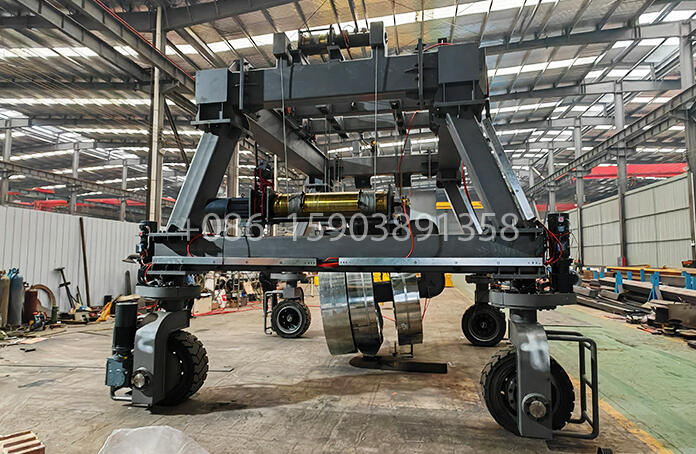
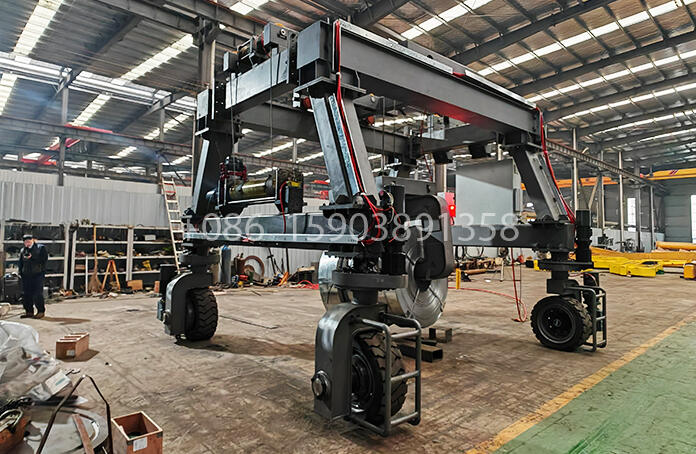
Rubber Tired Gantry Cranes
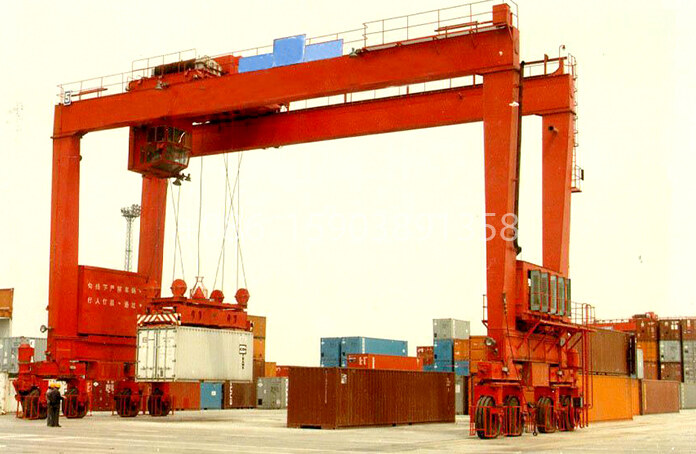
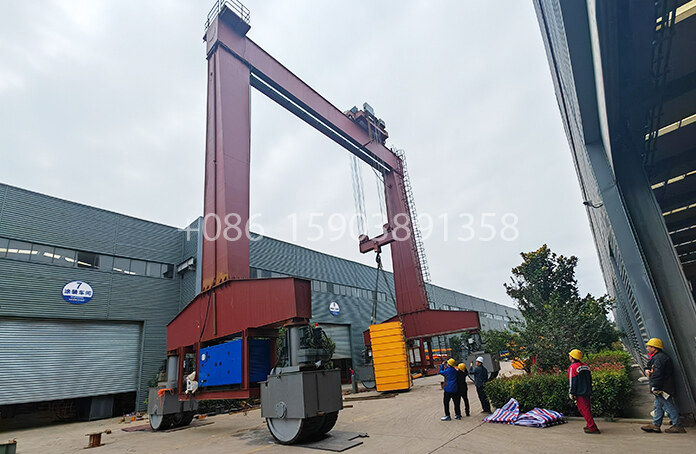
Rotary-tired gantry cranes are highly mobile and adaptable lifting equipment. Equipped with rubber tires, they can move freely without fixed tracks, allowing for rapid deployment and low maintenance costs. They are primarily used for loading, unloading, and handling operations in various locations. Their flexibility, adaptability, and economy make them crucial in ports, docks, construction sites, warehouses, and other fields, suitable for temporary, mobile, and short-term operational needs.
Product Description
Rotary-tired gantry cranes are trackless, flexibly mobile lifting equipment. Their core features, applications, and advantages are detailed below:
Core Positioning
Highly mobile lifting equipment, its core function is to complete the loading, unloading, handling, and installation of heavy objects such as containers and large machinery, adaptable to various trackless scenarios.
Core Advantages
Combining flexibility, adaptability, and economy, requiring no fixed tracks, allowing for rapid deployment, low maintenance costs, and adaptability to various ground conditions and operational requirements.
Core Feature 1 (High Mobility)
Equipped with rubber tires, it can move freely on various terrains, suitable for working environments without fixed tracks, such as construction sites and warehouses.
Core Feature 2 (Rapid Deployment)
It can be quickly deployed to the site, reducing setup and dismantling time, suitable for temporary and short-term operations.
Core Feature 3 (Low Foundation Requirements)
It has relatively low requirements for ground foundations, eliminating the need for fixed tracks and reducing foundation construction costs.
Core Feature 4 (High Adaptability)
It can adapt to different ground conditions and environments, suitable for various locations such as construction sites, docks, and warehouses.
Core Feature 5 (Easy Mobility)
Equipped with tires, it can be easily moved to the required location without any installation or dismantling work, saving significant time and labor costs.
Core Feature 6 (Low Maintenance Costs)
Solid tires eliminate the need for tire inflation; the use of a variable frequency motor and control system eliminates the need for a hydraulic system, reducing maintenance costs.
Application 1 (Loading and Unloading)
Widely used in ports, docks, logistics warehouses, etc., for loading and unloading containers, handling large machinery and equipment, lifting on construction sites, and other occasions.
Application 2 (Mobile Operations)
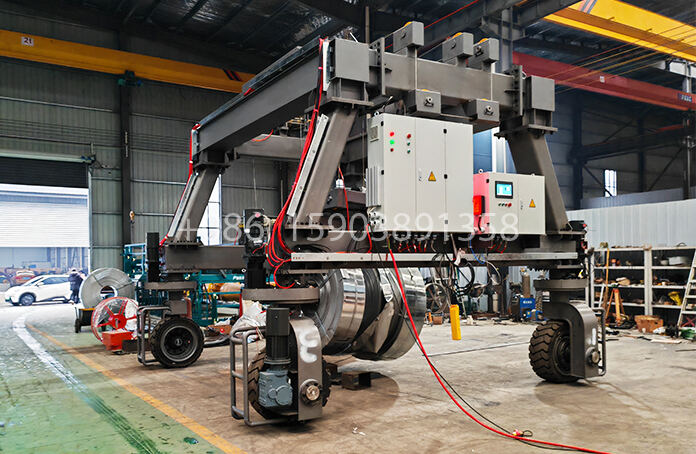
Typically used for loading and unloading heavy objects and installation operations. When the lifting capacity is small, it can operate without outriggers and can even move while loaded, making it suitable for mobile operations.
Industry Value
With its flexibility, adaptability, and economy, it plays an important role in ports, construction sites, warehouses, and other fields, adapting to various temporary and mobile lifting needs.
Product Feature
High Mobility
Equipped with rubber tires, it requires no fixed tracks and can move freely on various terrains, adapting to working environments without fixed tracks (such as construction sites and warehouses).
Efficient Deployment
It can be quickly deployed to the work site, significantly reducing setup and dismantling time, making it particularly suitable for temporary and short-term operation scenarios.
Low Foundation Requirements
No fixed tracks are required, and the requirements for the ground foundation are low, effectively reducing foundation construction costs and adapting to various site conditions.
Highly Adaptable
Adapts to various ground conditions and operating environments, widely suitable for lifting needs in construction sites, docks, warehouses, and other locations.
Easy to Move
The tire design allows for easy movement to the required location without additional installation or disassembly, saving time and labor costs.
Low Maintenance Costs
Solid tires eliminate the need for tire inflation; coupled with a variable frequency motor and control system, the hydraulic system is eliminated, significantly reducing maintenance costs.
Flexible Operation
Can operate without outriggers when lifting smaller loads, and can even move while loaded, adapting to mobile operations and improving operational convenience.
Wide Range of Applications
Capable of handling various tasks such as container loading and unloading, large machinery lifting, and construction site hoisting, suitable for multiple fields and scenarios.
Wheel Assembly Materials
Main Materials of the Product
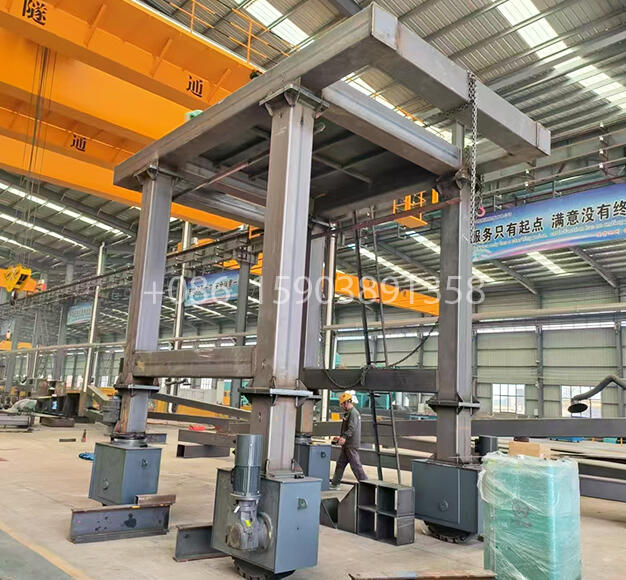
1. Main Structure (Gantry, Crossbeams): The core is made of high-quality carbon structural steel (mostly Q235B, Q355B) or alloy steel, welded and aged, possessing high strength, high rigidity, and good load-bearing capacity. It can stably bear the weight of heavy objects and resist impact and wind loads during operation.
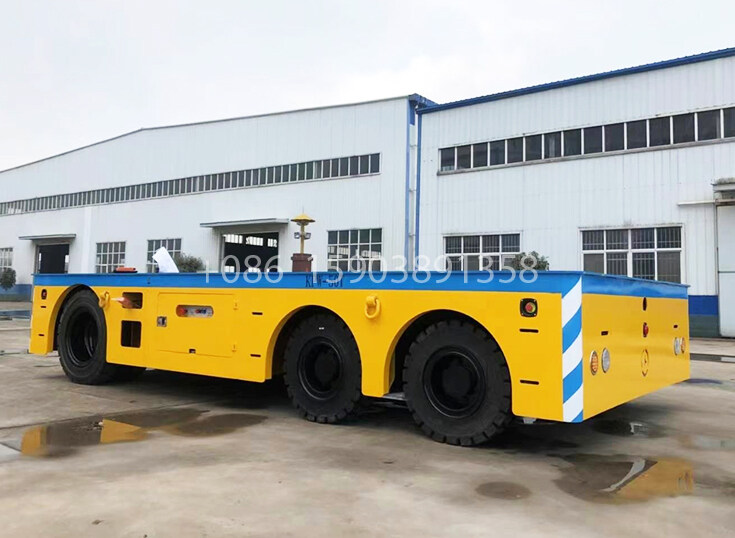
2. Walking Components: The tires are solid rubber tires, wear-resistant, puncture-resistant, require no inflation maintenance, and are suitable for various ground conditions; the rims are made of high-quality alloy steel, precision machined, with a firm connection and strong load-bearing capacity; the axle components of the walking mechanism are made of high-strength alloy steel, heat-treated, with good toughness and wear resistance, ensuring smooth movement.
3. Lifting Components: The hook, pulley blocks, and other core lifting components are made of high-strength alloy steel, quenched and tempered, with high hardness, wear resistance, and impact resistance, ensuring safe lifting operations; the wire rope is made of high-strength alloy steel wire rope, with high tensile strength, not easy to break, and extended service life.
4. Control and Power Components: The variable frequency motor and control system utilize high-quality steel and precision electrical components. The materials are corrosion-resistant, offer stable performance, and have low energy consumption, eliminating the need for a hydraulic system and reducing maintenance costs. Electrical wiring uses high-temperature resistant and wear-resistant specialized cables to ensure stable signal transmission.
5. Auxiliary Components: Connectors and fasteners are made of high-strength carbon steel or stainless steel, providing rust and corrosion resistance, secure connections, and ensuring the overall structural stability of the equipment. Seals are made of oil-resistant and wear-resistant rubber or polyurethane to prevent impurities from entering internal components, protecting the equipment and extending its service life. The gantry surface is treated with paint or galvanizing for corrosion resistance, enhancing its suitability for harsh environments such as outdoor areas and ports.