Under Rotating Suspended Beam Bridge Crane
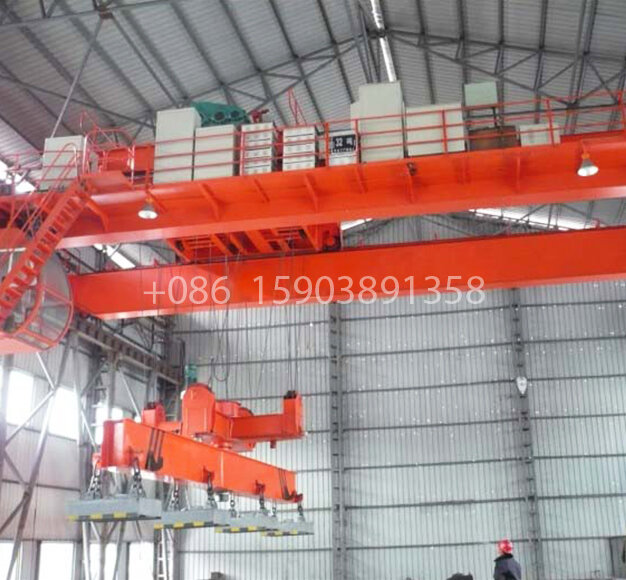
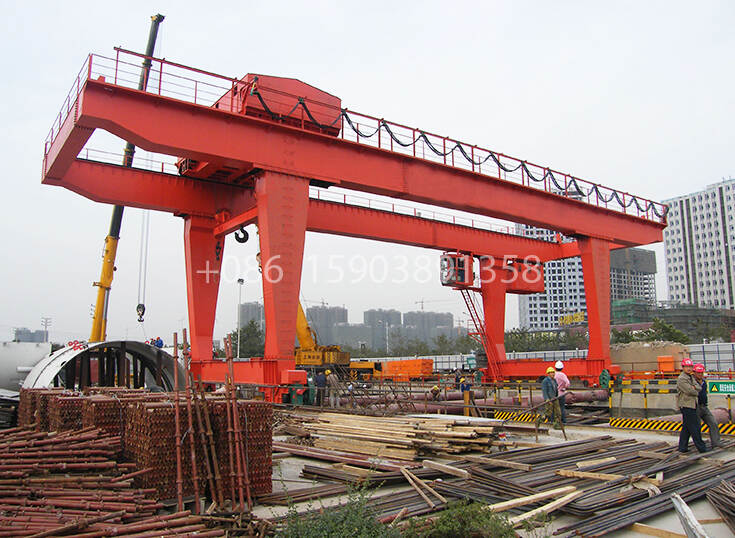
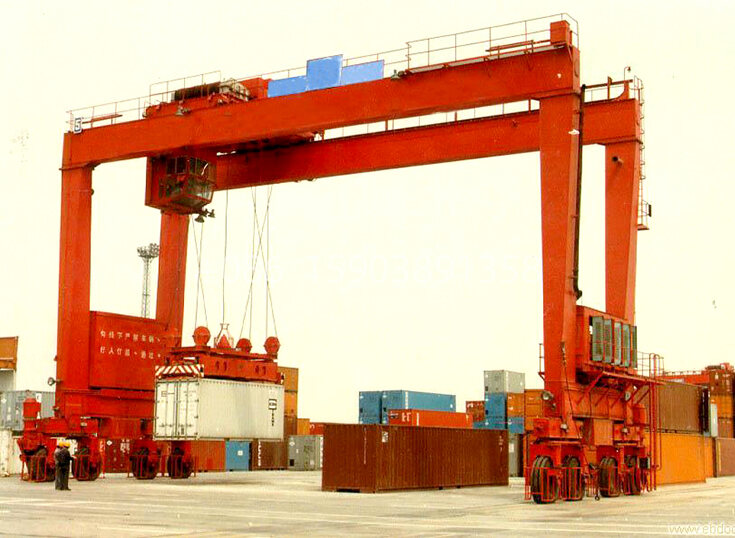
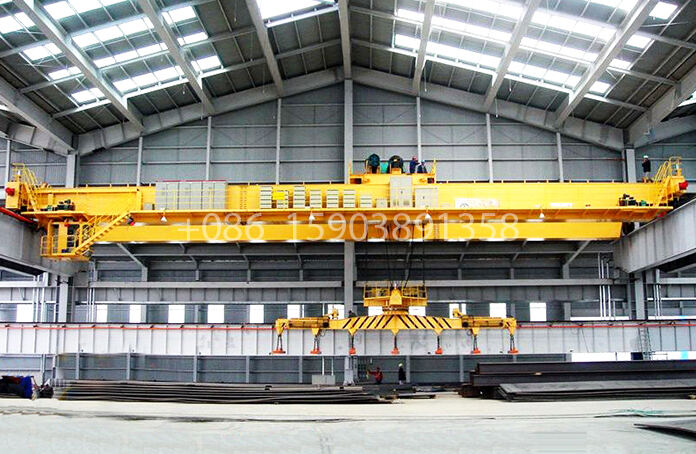
The bottom-swimming suspended beam bridge crane is a specialized lifting equipment. Its core components include a rotatable suspended beam and a flexible electromagnetic suspended beam. Adopting a bridge structure design, it boasts high stability and wide adaptability. It is mainly used in indoor or outdoor fixed spans in steel mills, shipyards, ports, storage yards, and warehouses. It is specifically designed for loading, unloading, and handling various materials such as steel plates, structural steel, and coils. Combining high efficiency, intelligence, and flexibility, it can meet the lifting needs of materials of different specifications and is a core material handling equipment in industries such as metallurgy, ports, and warehousing.
Product Description
Overall Structure
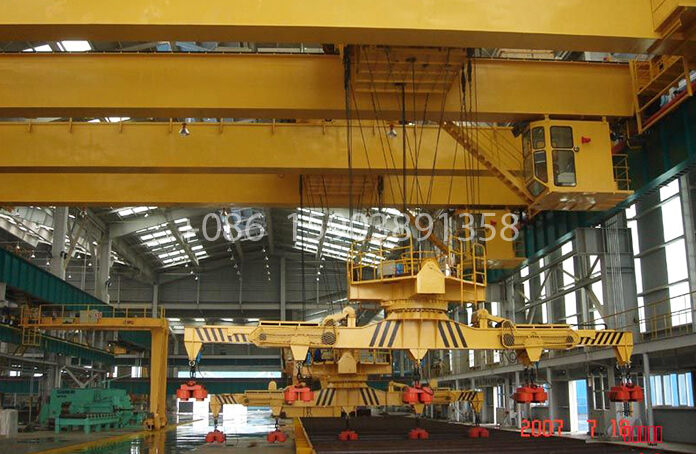
Adopting a bridge structure design, the core configuration includes a rotatable suspended beam and a flexible electromagnetic suspended beam. The structure is stable and possesses flexible rotation capabilities. It has a strong load-bearing capacity and can adapt to lifting operations of large and heavy materials. It can achieve a wide range of free movement within a fixed span, adapting to different site layout requirements.
Operation and Lifting Performance
The lifting mechanism primarily uses electric hoists or electric winches, offering fast and stable lifting and operation, effectively improving work efficiency. The suspended beam can rotate flexibly, and with the addition of a flexible electromagnetic suspension beam, it can adapt to different lifting scenarios, meeting the requirements for horizontal material rotation and precise positioning.
Control and Operation Methods
Some models adopt PLC + frequency converter closed-loop vector control, supporting multiple operation modes such as remote control, manual, and tablet control, offering convenient and flexible operation. The lifting device uses servo automatic control, enabling automatic extension and rotation, and is equipped with a high-precision detection device for autonomous obstacle avoidance, improving lifting safety and accuracy.
Adaptability and Customization Functions
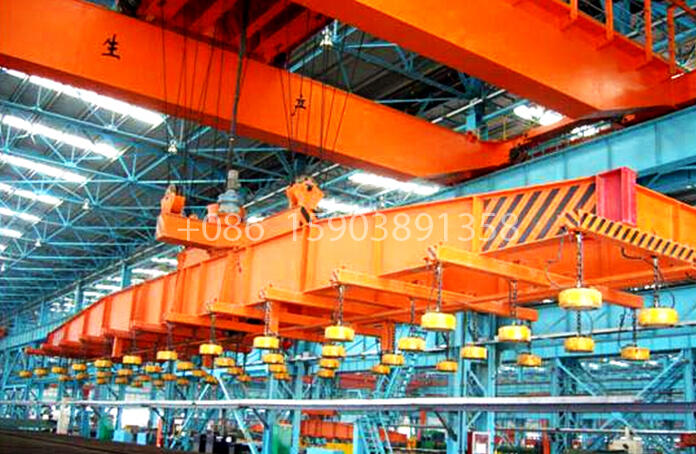
The electromagnet spacing and magnetic force can be electrically adjusted according to the specifications and weight of the materials being lifted, adapting to the lifting needs of different standard materials. Customizable functions include speed regulation for each mechanism, overload alarm, remote PLC control, fault detection, display recording, and printing systems.
Applicable Scenarios
Primarily used in indoor or outdoor fixed bays in steel mills, shipyards, ports, storage yards, and warehouses, specifically for loading, unloading, and handling materials such as steel plates, structural steel, and coils, adaptable to material transfer needs in various industrial scenarios.
Product Feature
High Stability and Wide Working Range
Utilizing a bridge structure, it is structurally stable and has a strong load-bearing capacity, capable of handling large and heavy materials; it can move freely within a wide range within the fixed bay, flexibly adapting to different site layouts and work point requirements, reducing blind spots.
High Operating Efficiency
The lifting mechanism uses electric hoists or electric winches, offering fast lifting and operation speeds and smooth operation without significant jamming, effectively shortening the single lifting cycle time, improving overall operating efficiency, and adapting to high-intensity material transfer scenarios.
High degree of automation
Some models adopt PLC + frequency converter closed-loop vector control, supporting multiple operation modes for flexible and convenient operation; the lifting device achieves servo automatic control, enabling automatic extension and rotation, and with high-precision detection devices, it achieves autonomous obstacle avoidance, improving lifting accuracy and ensuring operational safety.
Strong adaptability and wide compatibility
The spacing and magnetic force of the electromagnets can be electrically adjusted according to the material specifications and weight. The stepless adjustment design can accurately match the lifting needs of different materials, especially suitable for lifting materials of different standards and requiring horizontal rotation, adapting to a variety of material types.
High degree of customization
Customization of functions such as speed adjustment of each mechanism, overload alarm, fault detection, and record printing can be made according to the actual needs of users, flexibly adapting to the personalized lifting needs of different industries and scenarios, making it highly practical.
Wheel Assembly Materials
Main Materials
1. Main Beam and Cable Tray Material: High-strength low-alloy structural steel is used, primarily Q355B or Q355D steel, with some heavy-duty models using Q460 high-strength steel. The cable tray and main beam adopt a box-shaped structure design, possessing excellent bending, torsional, and fatigue resistance, capable of withstanding heavy loads and long-term operational wear.
2. Rotating Hanging Beam and Support Beam Material: The main body of the hanging beam is made of high-strength alloy steel, heat-treated to possess good rigidity and deformation resistance, enabling stable rotation; the elastic electromagnetic hanging beam frame uses wear-resistant and impact-resistant steel, ensuring the hanging beam is not easily damaged during frequent rotation and lifting.
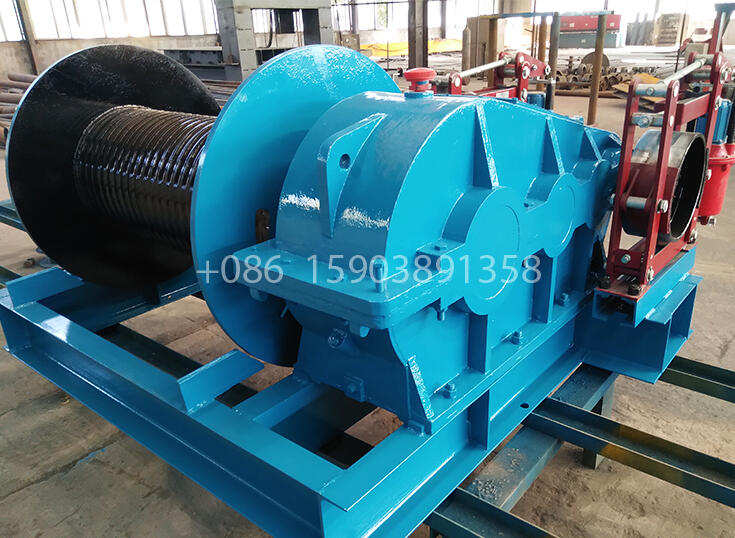
3. Lifting and Transmission Component Materials: Core lifting components such as hooks, wire ropes, and chains are made of high-strength alloy steel. The hooks undergo heat treatment, resulting in excellent tensile strength, wear resistance, and impact resistance. Pulleys are made of wear-resistant steel, and bearings are selected for their high temperature resistance and heavy-duty performance, extending the equipment's service life. The core components of the electric hoist and electric winch are made of high-strength wear-resistant materials, ensuring operational stability.
4. Electromagnetic Lifting Devices and Protective Materials: The electromagnets of the electromagnetic lifting beam are made of high-permeability alloy material, ensuring stable and adjustable magnetic force. The equipment surface undergoes shot blasting for rust removal, followed by epoxy zinc-rich primer and polyurethane topcoat treatment, providing excellent corrosion resistance, wind and sand protection, and wear resistance, making it suitable for harsh working environments such as open-air environments and steel mills. Electrical components are selected for their high protection rating, and the casing is made of waterproof and dustproof materials, ensuring stable operation of the electrical system.